
Recrear el lead de sintetizador del tema de 1982 llamado "Big Mess" de Devo puede ser un reto emocionante para cualquier fan de los sintes. Aquí tienes cómo programar el patch "Big Mess" lead y tocar este sonido icónico en la mayoría de sintetizadores sustractivos, tanto hardware como software (Serum, Vital, Pigments, Prophet, Korg, Moog, etc.). Ofrecemos la descarga del preset a continuación por comodidad, pero te recomendamos encarecidamente que uses nuestro tutorial de programación para recrearlo tú mismo en tu sintetizador favorito.
Audio original
Devo’s song “Big Mess,” from their 1982 album Oh, No! It’s Devo, features a distinctive synth lead that reflects the band’s innovative use of synthesizers during that era. While the specific synthesizer used in the original recording isn’t definitively documented, Devo was known for employing instruments like the Minimoog Model D, ARP Odyssey, and Sequential Circuits Prophet-5 during the early 1980s.
Nuestra recreación del sonido Lead Synth
Este clip de audio muestra lo cerca que hemos logrado igualar el tono original del lead sintetizador de la canción "Big Mess" de Devo, Te da un punto de referencia para diseñar tu propio preajuste de sintetizador. Tócalo tantas veces como necesites para familiarizarte con los matices del sonido.
Receta de programación del patch de sintetizador
Recrea este sonido tú mismo
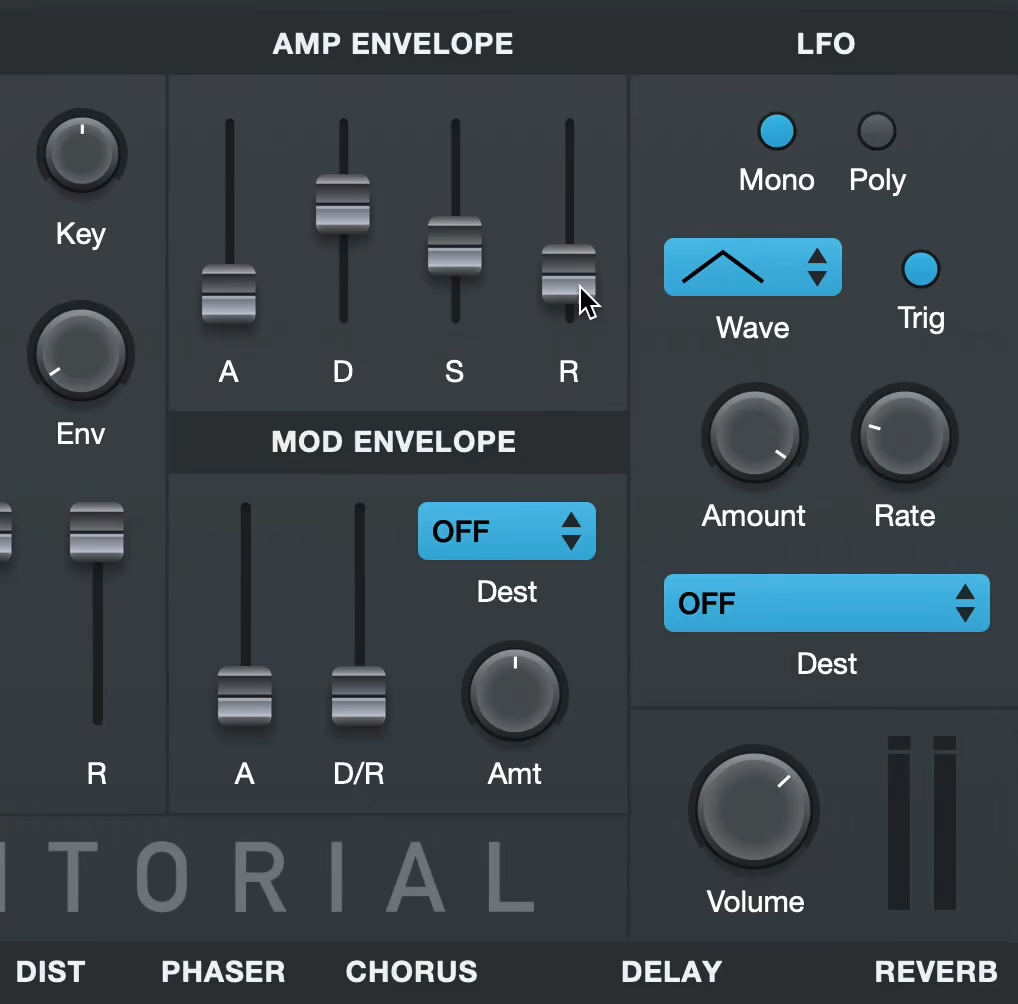
Aprende a programar este preset de sintetizador con Syntorial, todo de oído. Descarga la demo y prueba gratis desafíos ilimitados de sonidos famosos.
Para empezar
- Empieza inicializando tu sintetizador con una sierra simple, sin filtro, modulación ni efectos. En sintes software, usa el preset “init”/“default” o el botón que restablece todos los parámetros a sus valores predeterminados de fábrica.
- No hay dos sintetizadores exactamente iguales, así que toma los valores de abajo como aproximados y guíáte por el oído.
- Los valores en porcentaje (p. ej., 50%) representan la posición relativa de un knob o fader dentro de todo su recorrido. El recorrido total de cada parámetro puede variar de un sintetizador a otro, así que usa el oído.
Voces
- Modo de voz Mono
Envolvente de amplitud
- Ataque 0 ms
- Sustain: 100%
- Release: 20 ms
Osciladores
- Oscilador 1
- Forma de onda: Pulso
- Ancho de pulso: 50%
- Volumen: 50%
- Tono: +3 cents
- Oscilador 2
- Forma de onda: Pulso
- Ancho de pulso: 50%
- Tono: -3 cents
- Volumen: 50%
- Suboscilador
- Forma de onda: Pulso
- Ancho de pulso: 100%
- Tono: -1 octava
- Volumen: 45%
- Reiniciar la fase de todos los osciladores al iniciar la nota: Yes
Filtro
- Tipo: Pase-bajo
- Cutoff: 75%
LFO
- Destino: Filter Cutoff
- Forma de onda: Saw
- Cantidad: 35%
- Frecuencia: 1/8 Note
- Trigger: On
Nota: la configuración del parche puede diferir ligeramente en el desafío Syntorial.
Notes And Observations
Starting with the Basics: The Saw Waveform
Begin with the most fundamental element—the saw waveform. We’ll be changing this waveform in a bit, but it’s a great universal starting point for any patch.
Modulating the Sound: LFO and Cutoff
Once you have your plain saw waveform, the next step involves modulation. Use a Low Frequency Oscillator (LFO) to modulate the cutoff frequency of the sound. Start by switching your LFO waveform to saw and increase the speed to introduce that repeating-note effect. Carefully adjust the cutoff frequency and the LFO amount so that the modulation starts at the brightest point and only brings it down about halfway through the frequency range.
Changing the Waveform: Medium Pulse
After getting the modulation right, switch the waveform from a saw to a medium pulse wave. This change adds a somewhat hollower and more videogame-like character to the sound.
The Smearing Effect: Doubling and Detuning
To give the sound that smeared, thick quality, you’ll need to double it and apply a slight detune. This moves the sound away from a solid stagnant timbre, and introduces a soft-textured pulsation.
Adding Depth: The Sub Oscillator
Finally, to add some weight to the sound, bring in a sub oscillator set to a square wave. This underpinning layer enriches the synth lead, providing a solid bottom end that will carry the lead and give it a full-bodied presence.
By following these steps, you can create a synth lead that not only emulates the Devo “Big Mess” sound but also gives you a foundation on which to build your own unique synth sounds. Experimentation is key, and as you become more comfortable with these techniques, you can start tweaking and adding your own personal touch to make it truly your own.
Explorar más
Descargas de presets
¿No quieres aprender programación de sintetizadores ahora? Usa nuestro preset como punto de partida y ajústalo desde ahí. Regístrate para crear una cuenta en Audible Genius y descarga gratis los presets para los siguientes sintetizadores:
- Primer, nuestro VST de sintetizador gratuito
Comentarios
Esta receta es el resultado de una solicitud de recreación de preset de la comunidad de Syntorial. ¿Necesitas ayuda para recrear este sonido? ¿Tienes comentarios?
Únete a la conversación